
01
Environmental Maintenance
The condition of kitchens, bathrooms, living areas, surfaces and shared household environments requires appropriate baseline service and continuing upkeep to maintain functionality and livability.


Many support systems focus on the individual. Non-Medical Home Infrastructure™ focuses on the environment supporting that individual.
As people age in place, recover from illness, manage changing capacity, balance demanding careers, care for loved ones or navigate major life transitions, the home itself continues to require management.
This framework identifies the connected household systems that help daily life remain functional—including home upkeep, laundry, meal preparation, household logistics, organization, companionship, planned activities, seasonal responsibilities and continuity over time.
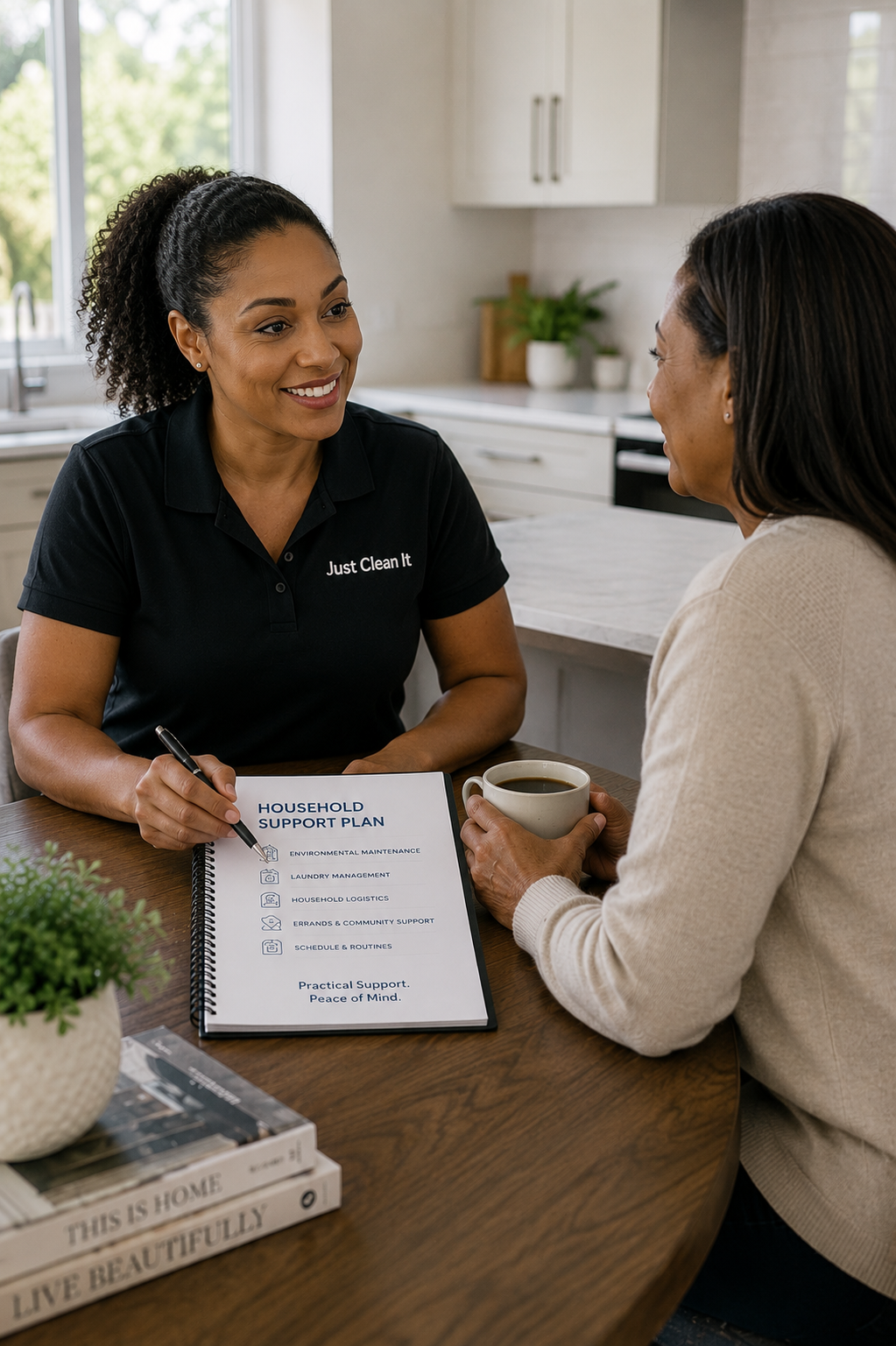
Different forms of support serve different purposes. Medical providers address health. Personal support workers assist with personal care. Professional cleaning services maintain the condition of the property. But the connected responsibilities, routines and daily function of the home environment may still remain outside a coordinated support structure.
Healthcare, nursing, therapy and personal support provide essential services connected to the individual’s health, treatment, personal care or physical assistance. Their professional scope is not the same as managing the broader operation of the household.
Professional cleaning addresses the condition, cleanliness and restoration of the home. It is an essential part of household function, but a cleaning appointment alone may not address laundry, meals, errands, routines, companionship, activities or continuing household coordination.
Home upkeep, laundry, meal preparation, household supplies, organization, errands, companionship, activities, seasonal responsibilities and established routines continue regardless of age, recovery, caregiving demands, work schedules or life transitions.
This framework identifies the practical household systems surrounding the individual and provides a structure for assessment, scheduling, communication, service delivery and continuity—without becoming medical care, personal care or a cleaning-only service.
Non-Medical Home Infrastructure™ exists because independent living, aging in place, recovery, caregiving and household stability require more than support for the individual. They also require practical support for the environment, systems and routines that make daily life at home possible.
The home is more than a physical structure. It functions through a collection of continuing responsibilities, routines and relationships that require attention, coordination and continuity over time.
The condition of kitchens, bathrooms, living areas, surfaces and shared household environments requires appropriate baseline service and continuing upkeep to maintain functionality and livability.
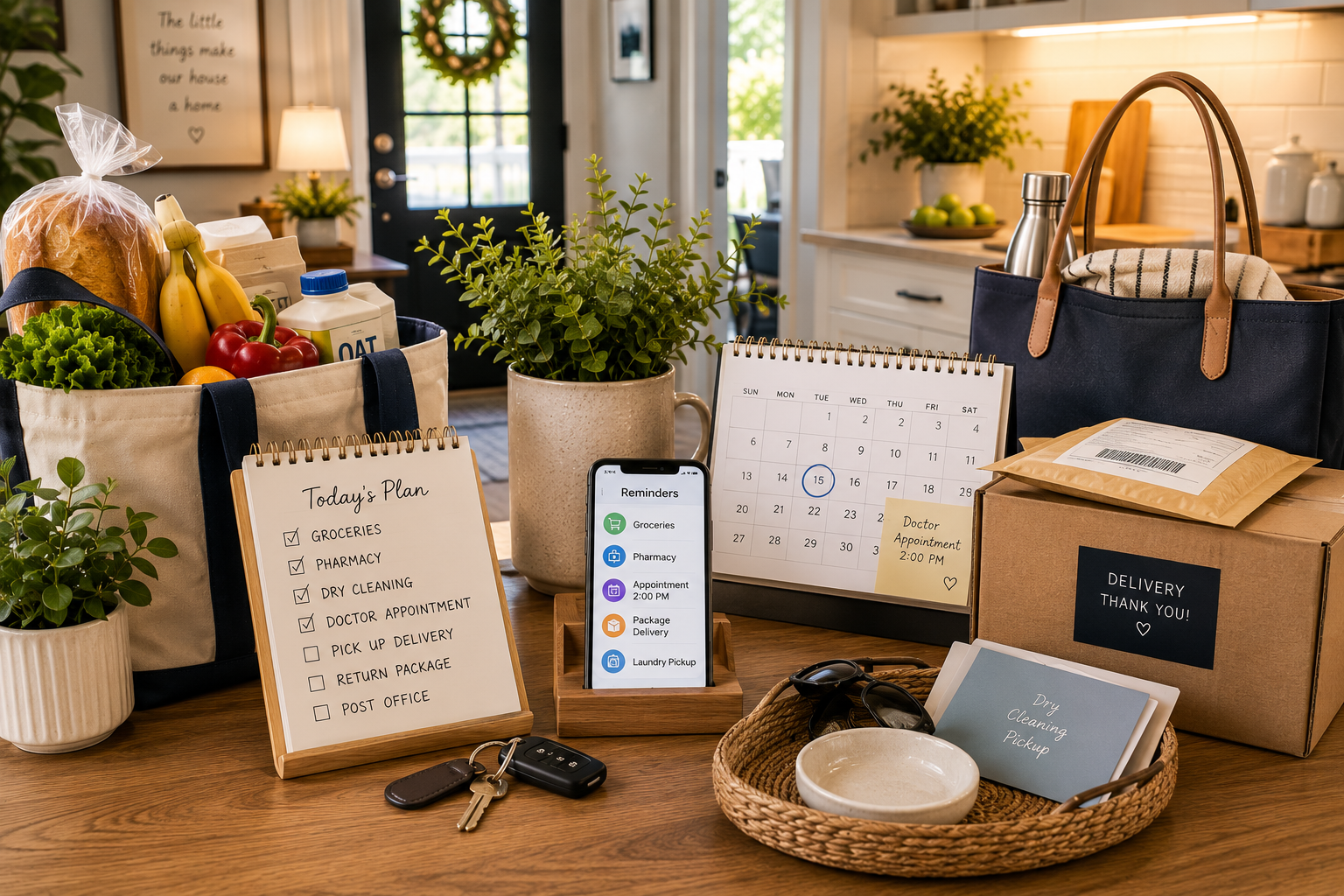
Groceries, household supplies, client-directed errands, deliveries and familiar meal preparation contribute to the practical demands of keeping everyday life organized and functioning.
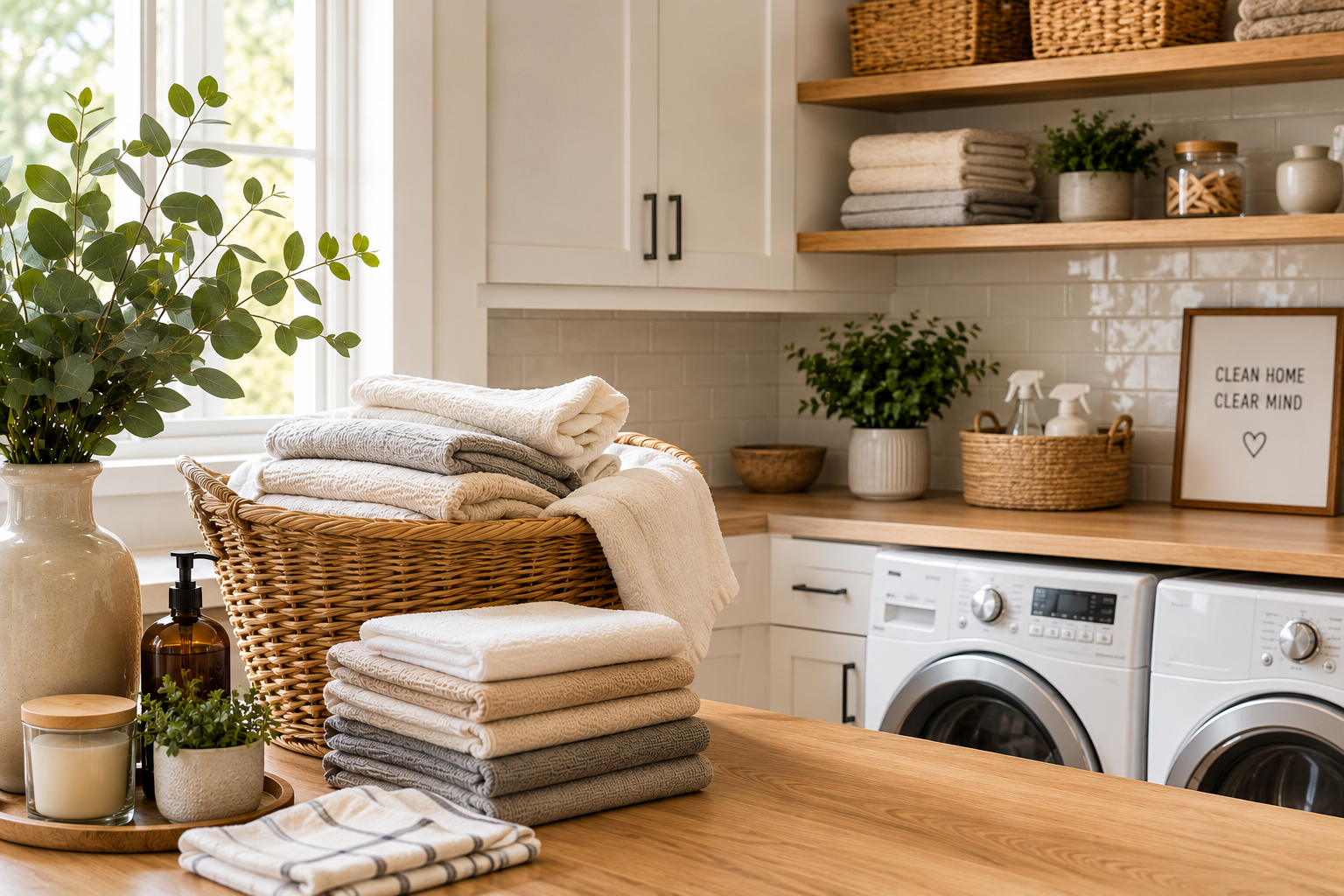
Clothing, bedding, towels and household textiles continue to accumulate regardless of work schedules, changing capacity, recovery or life transitions. They require an established and repeatable household routine.
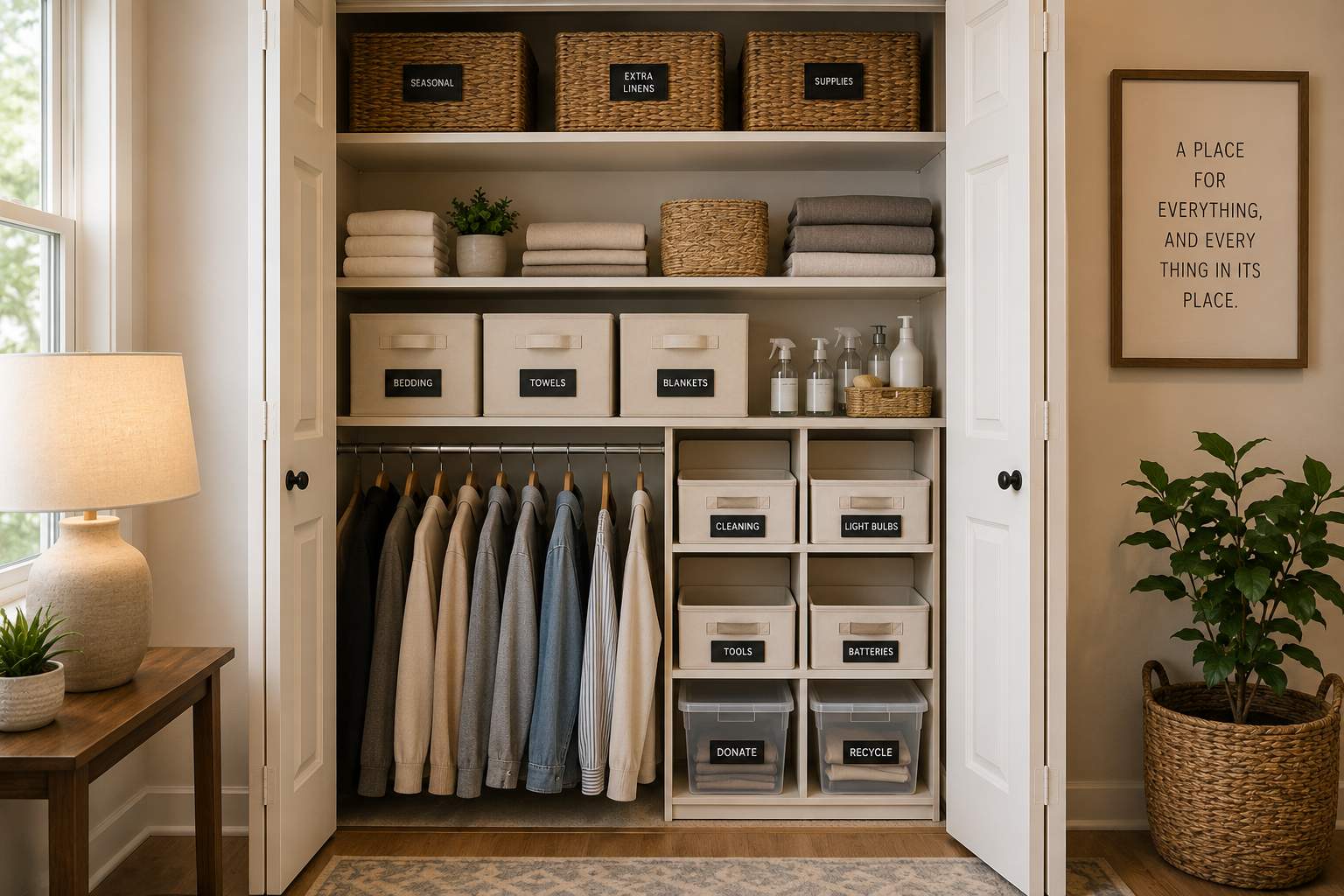
Functional living areas, household supplies and established routines often require structure and consistent practical support during periods of change, increased responsibility or reduced capacity.
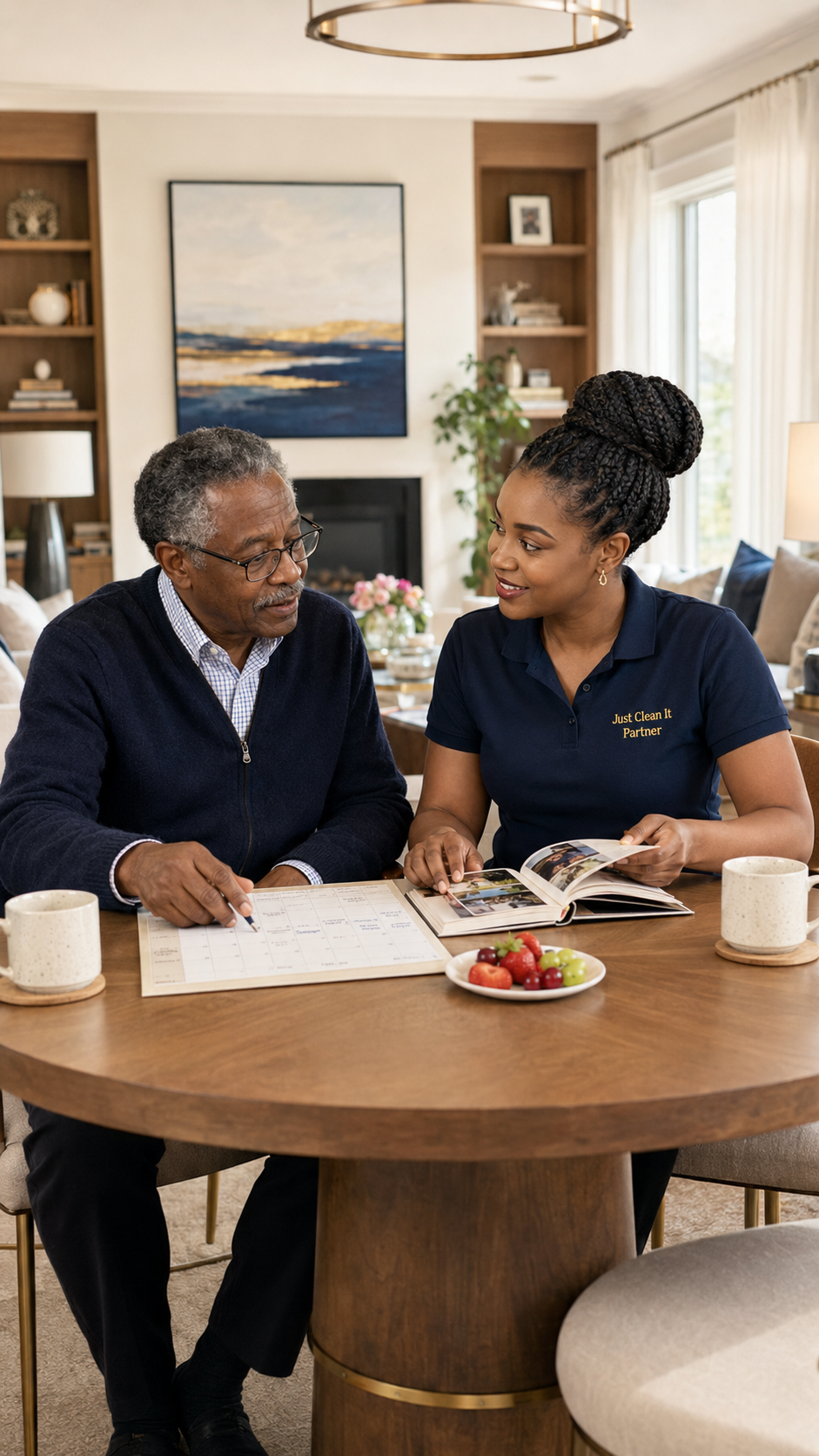
Conversation, familiar presence, shared time and planned non-clinical activities contribute to routine, connection and continuity within the home environment.
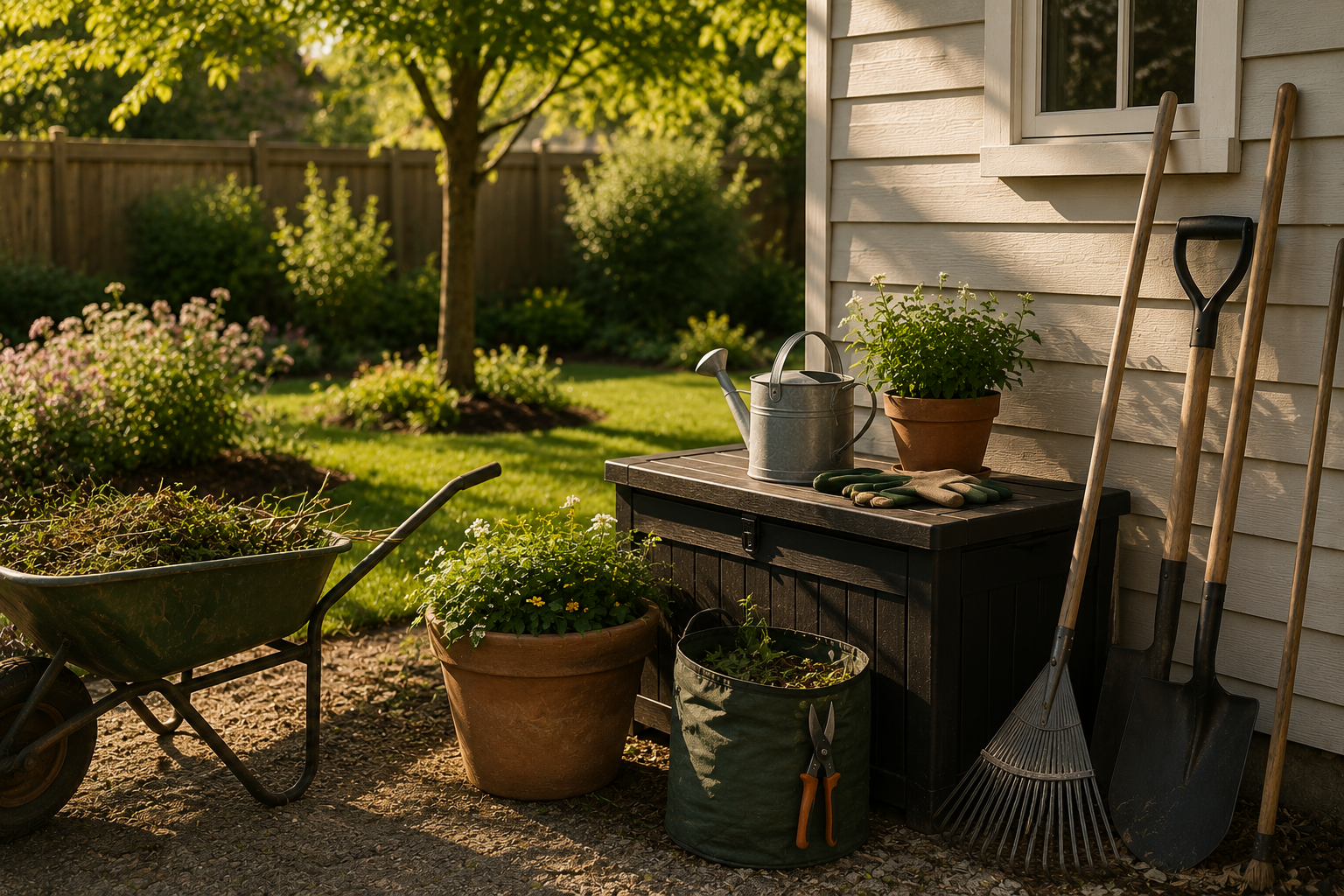
Outdoor upkeep, seasonal transitions, weather-related tasks and selected property-care responsibilities continue throughout the year and contribute to the function of the broader home environment.
Assessment, scope definition, scheduling, communication, pricing, approval and professional dispatch turn separate household needs into an organized and accountable service plan.

The ability to maintain responsibilities, relationships, routines and household standards over time often determines whether a home remains manageable as circumstances change.
Non-Medical Home Infrastructure™ views these responsibilities as connected systems rather than isolated tasks. This explains why meaningful household support may extend beyond a single service, visit or appointment.
The need for household infrastructure often becomes most apparent during periods of change, increased responsibility or reduced capacity. Even when personal circumstances shift, the responsibilities connected to the home continue.

Many people wish to remain in the homes they know and love. As circumstances evolve, the home may require additional structure and practical support to remain comfortable, functional and manageable.
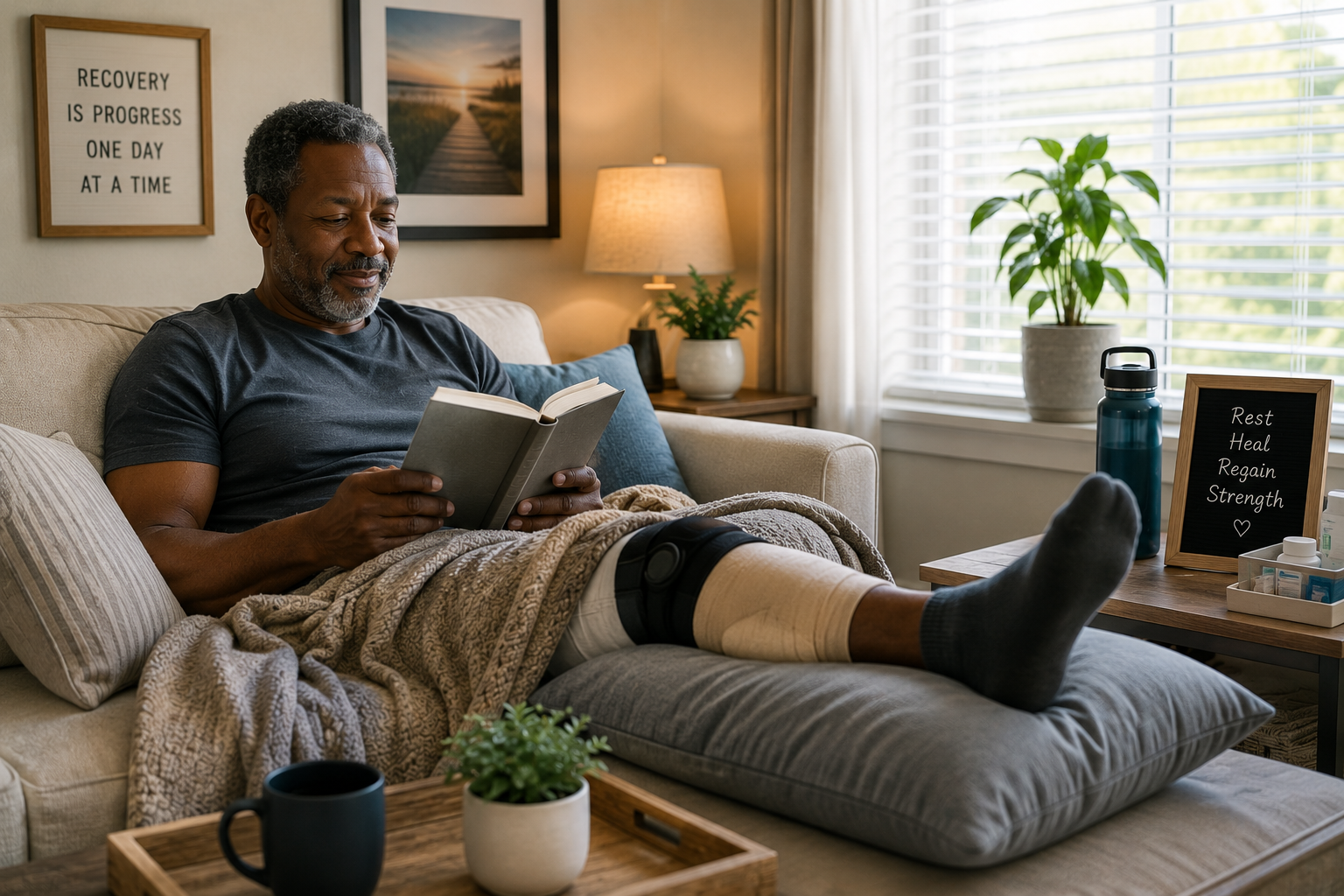
Recovery or changing physical capacity may affect what a person can manage at home. Cleaning, laundry, meal routines, errands and other household responsibilities continue even while attention is focused elsewhere.
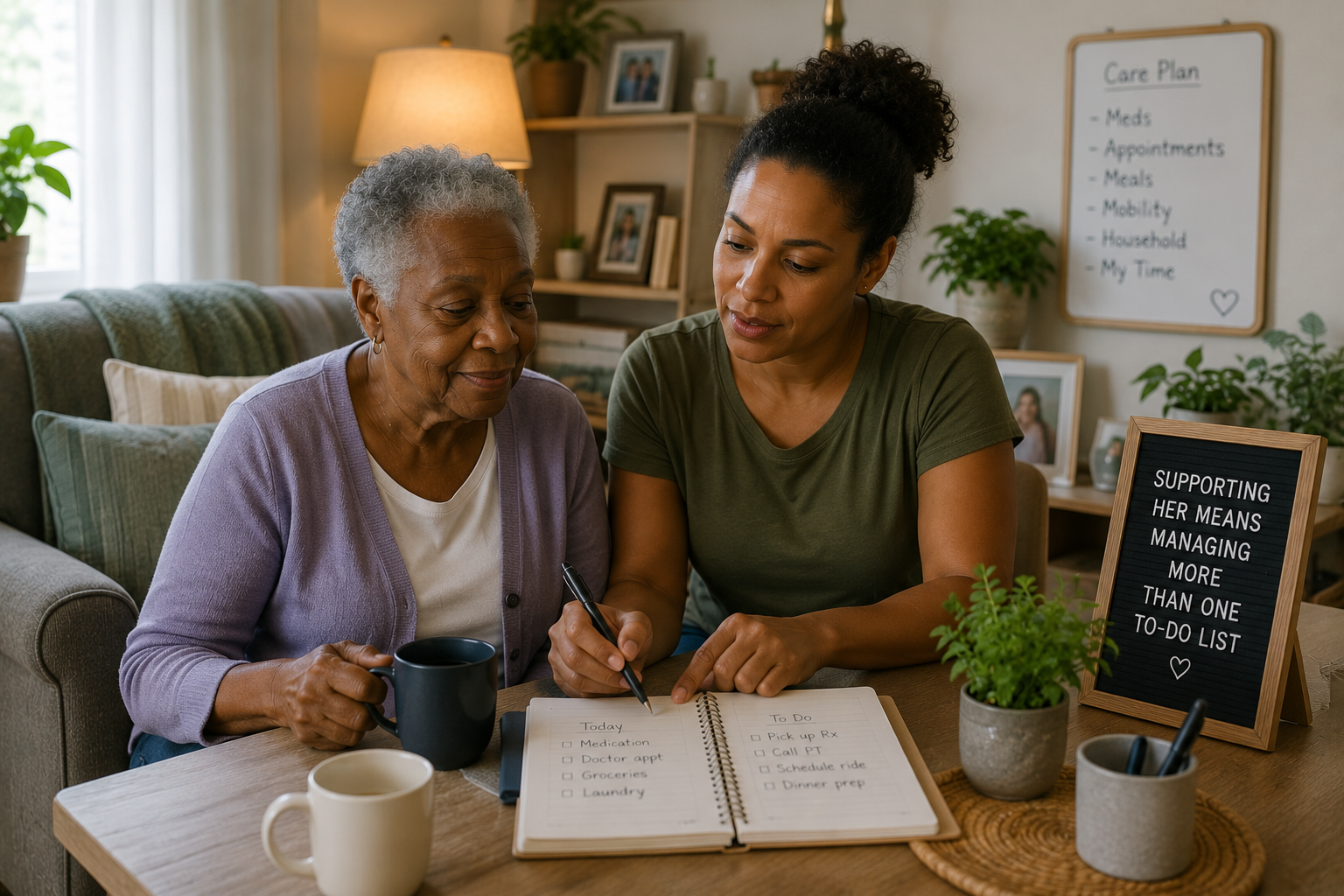
Supporting a loved one frequently increases household responsibilities. Practical home support can reduce the number of everyday duties resting on the family while helping preserve stability inside the home.

Work, caregiving and demanding schedules do not eliminate household responsibilities. Additional structure can help prevent essential routines from falling behind or becoming concentrated on one person.
Family members may not always be able to visit or manage household responsibilities in person. A dependable local team can carry out agreed support while providing greater continuity and accountability.
Some households need consistent assistance simply to keep everyday life functioning well. Regular support can protect established routines, reduce accumulating pressure and respond as needs change over time.
Non-Medical Home Infrastructure™ becomes practical when household responsibilities, service priorities and scheduling needs are organized into one clear pathway.
We begin by understanding the household, property size, current circumstances, access requirements and what is becoming difficult to manage.
Cleaning, laundry, meal routines, errands, household organization, companionship, planned activities and other agreed responsibilities are identified.
The household may require focused assistance, recurring support, service on several days each week or dedicated daily non-medical assistance.
Support may be arranged daily, on selected days, weekly, bi-weekly, tri-weekly, monthly or for a temporary period based on the circumstances.
The proposal outlines the agreed responsibilities, frequency, service format, recommended schedule, pricing and any conditions that must be reviewed.
The client may accept the proposal, request a conversation or arrange an in-home review when the appropriate scope cannot be confirmed remotely.
The approved service plan guides scheduling, team preparation and delivery so the responsibilities are clear before support begins.
The support arrangement can be reviewed when routines, priorities, frequency or household circumstances change over time.

Non-Medical Home Infrastructure™ was developed from the recognition that many households require more than traditional cleaning while still not requiring medical or personal care.
The missing layer exists in the environment itself: the surfaces, laundry, household supplies, meal routines, errands, organization, seasonal responsibilities, planned activities and everyday demands that continue regardless of age, recovery, caregiving responsibilities or changing capacity.
These responsibilities are interconnected. When they are treated as unrelated tasks, the client or family is left to coordinate the household alone. When they are organized through a clear service plan, appropriate scheduling and accountable delivery, they become part of a more dependable support structure.
Within Lifestyle Management Cleaning™, this framework gives language, structure and operational clarity to a category of support that has existed in households for generations but has rarely been properly defined.
Clear answers about the framework, its boundaries and how it connects household responsibilities to practical service delivery.
The ability to remain comfortable, independent and supported often depends on more than the individual alone.
It also depends on the condition, continuity and management of the environment surrounding them—the routines, responsibilities and practical systems that allow everyday life at home to continue.
We do not accept unsolicited sales calls, marketing pitches, or vendor solicitations. All partnership, supplier, or service provider inquiries must be submitted through our . Unsolicited calls will not be returned.
Opening Hours:
Monday to Saturday: 8:00 AM – 6:00 PM
Contact Us:
(647) 828-8854